
Key Takeaways
- Rushing a hire can lead to costly and disruptive decisions here in the UK.
- A vague job description often attracts the wrong candidates.
- Focusing entirely on qualifications can mean overlooking personality and cultural fit.
- Slow communication can cause good candidates to accept other offers.
- A structured recruitment process helps UK law firms make more confident hiring decisions.
Introduction
Hiring the right person here in the UK is important for any law firm, but the whole process of hiring the right person can become complicated when there are demanding caseloads, busy partners & limited time to manage the whole recruitment process. Even experienced firms in the vicinity make mistakes when trying to fill a position quickly. The problem is that a poor hire in the UK rarely ends with a job appointment. It can affect whole team morale, client relationships & productivity; while starting the recruitment process all over again can take even more time.
Understanding some of the most common legal hiring mistakes in the UK can help firms avoid unnecessary delays & make better overall hiring decisions.
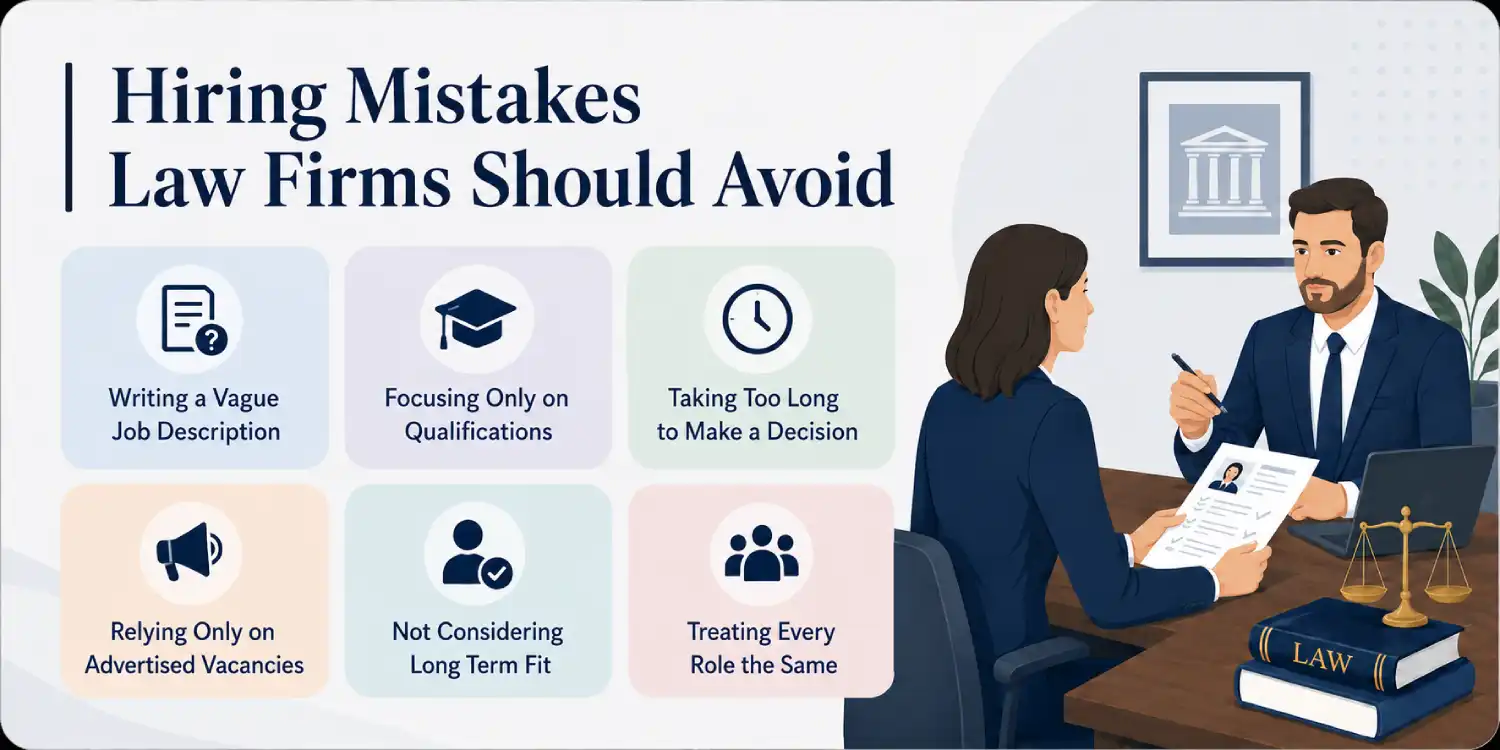
1. Writing a Vague Job Description
A job description should tell candidates exactly what the firm is looking for. However; some UK firms use broad descriptions that do not clearly explain the responsibilities, required experience or expectations of the role. This can attract a very large number of unsuitable applications and make the selection process harder.
Before advertising a vacancy, UK firms should be clear about the practice area, level of experience, key responsibilities & what success in the position looks like. The clearer the brief; the easier it becomes to identify relevant candidates.
2. Focusing Only on Qualifications
Legal qualifications and technical experience here in the UK are obviously important, but they are not the whole picture. Someone can have an impressive CV & still struggle in a particular firm's working environment here in the UK. Communication style, commercial awareness, teamwork & career ambitions can all influence whether an appointment works in the long term.
Firms should therefore consider both professional ability and cultural fit rather than treating qualifications as the only deciding factor.
3. Taking Too Long to Make a Decision
Good legal professionals often have options. If a firm takes too long to arrange all the interviews, provide genuine feedback or make a job offer, a strong candidate in the UK may move on. Lengthy internal discussions are understandable, particularly for senior appointments; but unnecessary delays can cost UK firms excellent candidates.
Having clear decision makers and agreed timelines before recruitment begins can help keep the process moving.
4. Relying Only on Advertised Vacancies
Advertising a role here in the UK can be effective; but it should not necessarily be the only approach. Some highly suitable lawyers are not actively looking for another position. They may still consider the right opportunity if it matches their experience and career plans.
This is one reason specialist recruitment support can be valuable. For example, QC Legal uses targeted headhunting and established relationships within the legal profession to connect firms here in the UK with candidates who may not be actively searching.
5. Not Considering Long Term Fit
It can be tempting to hire someone simply here in the UK because they can fill an immediate gap. However; recruitment should ideally support the firm's longer term plans. Consider where the candidate could be in two or three years. Can they grow with the firm? Do their ambitions align with the team's direction? Will they contribute positively to the firm's working environment?
Thinking beyond the immediate vacancy can lead to stronger and more sustainable appointments.
6. Treating Every Role the Same
A newly qualified solicitor; experienced associate and senior partner should not necessarily be recruited in the same way. Different levels require different hiring approaches; from assessing technical skills and training potential to understanding leadership experience, client relationships and business development.
Specialist recruiters can help firms tailor their approach according to the seniority and nature of the position. QC Legal; for instance, supports recruitment from newly qualified & junior solicitors through to partner and senior legal appointments.
The Bottom Line
Recruitment is too important to approach as a box ticking exercise. Avoiding common legal hiring mistakes in the UK means taking time to define the role properly; assess all the candidates beyond their CVs, communicate promptly and consider long term suitability. A focused and well-planned recruitment process can help law firms attract stronger candidates while reducing the risk of making a costly appointment that does not work out.